

5 Benefits of Practicing Yoga in Community
Yes, you can practice yoga by yourself. You can roll out your mat at home, follow a video, and enjoy many of yoga’s physical and mental benefits.
But there is something different about practicing with other people.
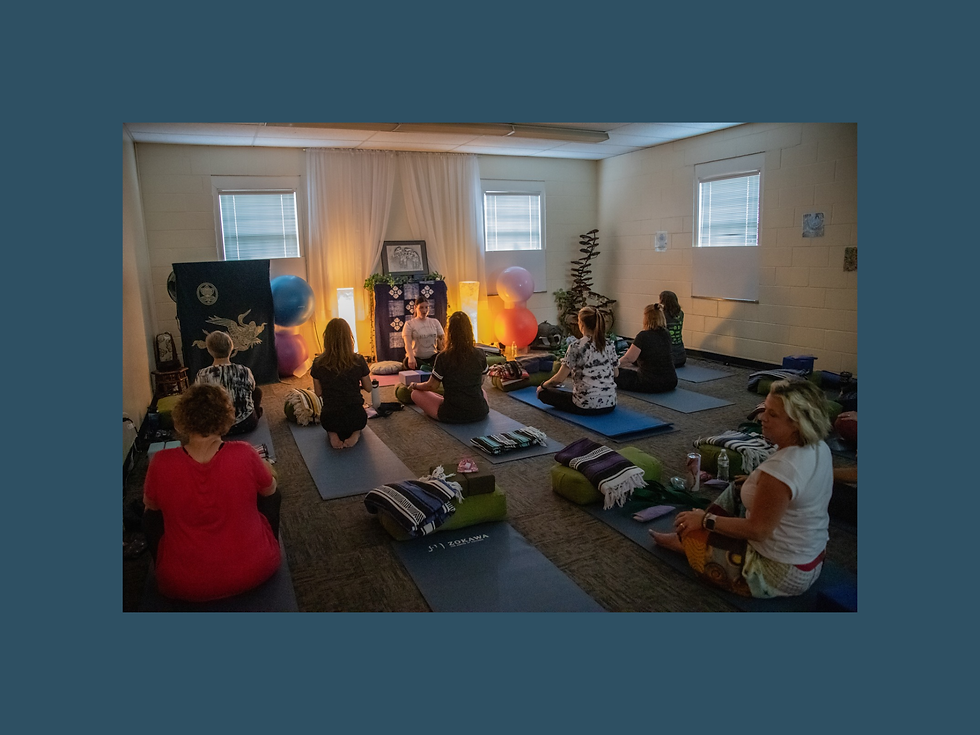
At Zokawa, we believe yoga is more than a workout. It is a practice that helps us become more aware of ourselves—and, perhaps just as importantly, more connected to the world around us.
And science is beginning to give us some interesting evidence for something many yoga practitioners have experienced firsthand: there are benefits to practicing in community that go beyond what happens on your own mat.
Here are five of them.
1. Community Can Help You Keep Showing Up
Let's start with the least glamorous—and perhaps most important—part of any wellness practice:
Consistency.
Knowing that someone will be there can make it easier to be there yourself.
Research on community-based group exercise has identified social connectedness, social support, and relationships with other participants as important factors in continued participation. A systematic review of community-based group exercise programs for older adults found social connectedness to be one of the recurring themes associated with adherence. And this begins long before you are categorized as an "older adult".
Another systematic review identified social support among the prominent psychosocial factors associated with exercise adherence.
In other words, your friend doesn't have to give you a motivational speech every Tuesday at 5:30.
Sometimes simply knowing, “We're going together,” is enough.
And that matters because the benefits of movement don't come from the class you intended to attend. They come from the classes you actually show up for.
2. Practicing With Others Can Create a Sense of Belonging
Humans are social creatures. We need connection as part of our overall well-being.
A yoga class creates a surprisingly simple opportunity for that connection. You enter the room as individuals, each carrying your own day, your own stress, your own stories. Then, for an hour, you share an experience.
You breathe together.
You move together.
You laugh together when balance goes sideways or props get confusing.
Over time, the people you see on neighboring mats can become familiar faces—and familiar faces then become community.

A qualitative study of participants in the NHS Yoga4Health program found that social connectedness was an unexpected benefit of participating in yoga. Participants specifically described practicing with a group as something that supported their ongoing attendance and practice.
That doesn't mean every yoga class automatically produces deep friendships. What it does mean is that regular regular shared experiences create opportunities for connection. And connection opens the door to meaningful relationships.
3. A Group Experience Makes Practice More Enjoyable
Let's talk about something that doesn't always make it into wellness research:
Fun matters.
We tend to think of healthy habits as things we're supposed to do because they're good for us. That knowing that something is "good for us" isn't usually enough. If an activity is enjoyable, though, we're more likely to want to keep doing it.
Research on group-based physical activity identified enjoyment, social relationships, group identification, and a sense of connection as factors that can influence participation and adherence.
Honestly, doesn't that make intuitive sense?
A yoga practice can be challenging. It can also be playful.
You can work hard and sometimes you even laugh harder.
You can wobble and smile.
You can discover that your friend is extraordinarily graceful—or spectacularly uncoordinated.
You experience something difficult together and leave feeling better than when you arrived.

That positive emotional experience matters. Wellness doesn't have to be just another item on the list of things we're forcing ourselves to do; it should be something you enjoy.
4. Practicing Together Can Help You Feel Supported
There is an important difference between doing something alongside people and feeling supported by people.
Feeling supported is what makes a meaningful difference.
Research examining exercise adherence consistently points to social support as an important factor associated with continuing an exercise practice. A 2024 mixed-methods systematic review of exercise adherence identified multidimensional social support as one of several important areas influencing participation.
Let's be clear - support doesn't necessarily mean someone is standing beside your mat saying, “You can do it!” Though you will hear that in your Zokawa classes for sure!
It might also be:
“Are you going to class tonight?”
“I haven't seen you in a while!”
“I'm glad you're here.”
Or simply recognizing someone's face when they walk through the door.
These small interactions can reinforce the idea that you're part of something—and that your well-being matters.
5. Community Can Turn a Wellness Activity into Part of Your Life
Perhaps the biggest benefit of practicing in community is that yoga can become more than something you do; it becomes something you belong to.
Research on group-based physical activity suggests that social relationships, group identity, and supportive environments contribute to sustained participation. In one study of people participating in a group yoga program, participants described yoga as creating a new social reference point in their lives, with feelings of belonging, connectedness, and shared identity becoming part of the experience.

That's an important distinction:
A workout is something you complete.
A practice is something you return to.
And a community is something you become part of.
When those three things overlap, taking care of yourself can become less about checking a box and more about participating in a life you actually enjoy.
So…Bring Your Boo
Maybe you've been practicing yoga for years.
Maybe you've never tried it.
Maybe you've been saying, “I really should try yoga sometime,” for approximately three years.
This is your sign.
Bring the friend who needs to move.
Bring the friend who needs to breathe.
Bring the friend who needs a little less stress.
Bring the friend who says they're “not flexible enough for yoga.”
Bring the friend who makes everything more fun.

All month long, October is Bring Your Boo at Zokawa!
Anyone attending any class can bring a friend for FREE.
Whether you're a member, using a class package, dropping in, or taking advantage of our 2-Week Intro, you can bring a new guest to join you for one complimentary class.
We're doing this because we get it - sometimes the shift begins with something very simple:
“Hey. Want to come with me?”
We've got a place just for you!

START HERE: www.zokawa.com
References:
Reference: Picorelli et al. (2014), Adherence to community based group exercise interventions for older people: A mixed-methods systematic review.
Reference: McArthur et al. (2019), Assessing the psychosocial factors associated with adherence to exercise referral schemes: A systematic review.
Reference: Reeves et al. (2022), ‘Joining a group was inspiring’: a qualitative study of service users’ experiences of yoga on social prescription.
Reference: Systematic review of psychosocial predictors of adherence in adult group fitness classes (2026).



Comments